

Background
Released in 1968 Ford’s new kid on the block was its first car to be built simultaneously in Britain and Germany, and my how both countries (as well as many others) took it to their collective hearts. By the time 1975 came around, over 2,240,000 examples had found a home.
Key to this was neat styling, allied to simple but robust mechanicals – both true Ford calling cards. With McPherson struts up front, rack-and-pinion steering and 1100cc or 1300cc engines, the standard road cars were pleasant enough little things.
For those that wanted a marginally fruitier version there was the GT, which had a Weber carburettor and 75bhp. While they all helped keep Britain (and Germany) moving, the more sporting variants would prove that the underlying basis was simply perfect for competition.
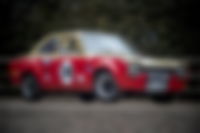
The legendary Twin Cam had the Lotus Cortina engine and running gear, servo front discs, a strengthened bodyshell, split bumpers, flared arches and proved a rorty, little demon on the rally scene. Ford nailed the Manufacturer’s Championship in 1968, while in that year’s British Saloon Car Championship Frank Gardner (driving the Alan Mann-prepped XOO 349F) took his second title in a row.
Back on the road, the Escort Mexico arrived in 1970 – named after the Daily-Mirror-sponsored London to Mexico rally, in which 1588cc Kent engined cars, finished 1st, 3rd, 5th and 6th. It had a strengthened bodyshell but, crucially, an OHV Cortina engine. It looked the Mutt’s proverbials, and despite being slower, it filled the niche between GT and Twin Cam perfectly.
The BDA-engined RS1600 would join it later that year, with the OHC 2-litre RS2000 following in 1973. Ford aficionados lusted after all models, and that continues to this very day. Hairy, rorty and fun, there’s very little that’ll make you smile quite like a fast Ford.