

1925 Crossley 15/30 (14hp)

18 Bids
8:30 PM, 28 Apr 2021Vehicle sold
Sold for

£13,250

Background

Crossley Brothers was formed in 1867 by Francis and William Crossley and found early renown for its design and production of engines. Having provided these to a number of manufacturers, a move into making its own vehicles was a natural progression and in 1904 Crossley Motors was founded.

Its first car, the 22hp, was shown at the 1904 London Motor Show and is believed to have had an imported Belgian chassis, which was mated to a four-cylinder engine driving the back axle via chains.

Pre-War design took a more modern turn with the arrival of designers AW Reeves and GH Woods, and their the 12/14 (later the 15hp) and 20hp models.

Having played an active role in the war effort by supplying cars and light trucks to the Royal Flying Corps, post-war manufacture began immediately. The 25/30 was based on surplus military vehicles and was followed by the well-regarded 19.6hp and the highly sought after 20/70.

The 12/14 arrived in 1922. This downsized new car was smaller than standard Crossley fare, and accordingly at just £400 it was more affordable. Available in a multitude of body styles (4/5-seat tourer, 2-seat Tourer, 2-seat Coupe, 4-door saloon, Fabric saloon, Landaulette and Saloon-Limousine, it would go on to become the company’s best selling civilian model with around 5500 constructed.

The name was subsequently changed to 14hp; however, the reason why remains a mystery as its RAC horsepower rating was in fact 15.6 (actual power output 31bhp) – its model moniker for sale in Australia and New Zealand, the ‘15/30’, made more sense.

Either way, it was well received. Its in-unit engine, three-speed gearbox and single plate dry clutch offering a thoroughly modern motoring experience. The model was upgraded in 1925, gaining four wheel brakes as standard, a wider track and modified axles.

  • 2940S
  • approx. 20K (since rebuild)
  • 14hp (2400cc)
  • Manual (reverse and 3 forward)
  • Maroon
  • Brown Leather

Background

Crossley Brothers was formed in 1867 by Francis and William Crossley and found early renown for its design and production of engines. Having provided these to a number of manufacturers, a move into making its own vehicles was a natural progression and in 1904 Crossley Motors was founded.

Its first car, the 22hp, was shown at the 1904 London Motor Show and is believed to have had an imported Belgian chassis, which was mated to a four-cylinder engine driving the back axle via chains.

Pre-War design took a more modern turn with the arrival of designers AW Reeves and GH Woods, and their the 12/14 (later the 15hp) and 20hp models.

Having played an active role in the war effort by supplying cars and light trucks to the Royal Flying Corps, post-war manufacture began immediately. The 25/30 was based on surplus military vehicles and was followed by the well-regarded 19.6hp and the highly sought after 20/70.

The 12/14 arrived in 1922. This downsized new car was smaller than standard Crossley fare, and accordingly at just £400 it was more affordable. Available in a multitude of body styles (4/5-seat tourer, 2-seat Tourer, 2-seat Coupe, 4-door saloon, Fabric saloon, Landaulette and Saloon-Limousine, it would go on to become the company’s best selling civilian model with around 5500 constructed.

The name was subsequently changed to 14hp; however, the reason why remains a mystery as its RAC horsepower rating was in fact 15.6 (actual power output 31bhp) – its model moniker for sale in Australia and New Zealand, the ‘15/30’, made more sense.

Either way, it was well received. Its in-unit engine, three-speed gearbox and single plate dry clutch offering a thoroughly modern motoring experience. The model was upgraded in 1925, gaining four wheel brakes as standard, a wider track and modified axles.

Video

Overview

This delightful Crossley was constructed in Manchester in 1925 and exported to Australia as a rolling chassis, where it was bodied by Properts of Sydney.

Its first owner (a Mr Conway) purchased it at the Sydney Motor Show and it then stayed in the local area, passing between several owners and eventually ending up with a flat back conversion (Ute, to use Australian parlance!).

Australian Crossley Register member Peter Caunt bought the car in a dilapidated state in 1985 and began the process of starting its restoration, with the chassis restored. However, the project stalled, and the car was put up for sale.

“It was the early Nineties and I knew the car was coming back from Australia, as I was acquainted with the person bringing it over,” explains vendor Stephen Thourgood. “The chassis was complete but required work including stripping down and rebuilding the engine; although the bodywork was in a sorry state, a surprising amount of it survived.”

He finished the Crossley’s restoration in 1994 and it’s been taxed and insured for the road ever since then. “We’ve been on a Touring rally through Holland and Germany, as well as regularly attending The Crossley Register rallies.”

Having owned the car for almost 30 years now, it’s time sadly for Stephen and the 14hp to part ways. “The recent lockdown has caused my wife and I to do some deep thinking; we’re not getting any younger and decided to buy a camper van to tour different parts of the UK that we haven’t seen before.”

That decision means that the Crossley is ready and willing for its next owner; someone who can give it a good home, continue its story and use it regularly.

Exterior

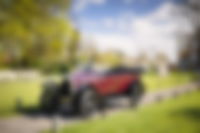
It’s impossible to look at this car without smiling; it provides the viewer with an instant feel-good factor, transporting you to yesteryear and an altogether slower pace of life.

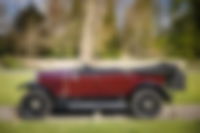
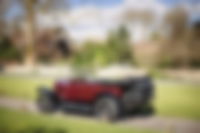
“The paintwork was brush painted and varnished by a professional coach painter/sign writer as per the original,” explains Stephen. “And gives a good finish, although some small surface areas could be retouched if required. The Maroon paint is by Techaloid (some of the leftover paint is provided) and was matched to the paint on the rear doors, which was the original paintwork.”

The Mohair hood and tonneau were fitted in 2003 and remain in excellent condition. He says that with practice it can be lifted, and lowered, by one person but it’s easier if there are two of you.

The original ‘Body by Properts Ltd, Sydney’ badges remain riveted to the sills. There’s an obligatory colour-matched Esso fuel can strapped to the offside running board, a spare wheel stowed at the rear and a luggage box fitted for Touring. A wing mirror is also fitted to the windscreen frame on the offside.

As our pictures and video show, it has a lovely patina.

Interior

There’s not much to the Crossley’s dashboard, save for a handful of dials, but it presents nicely. The wood retains a deep colour and the instruments all remain clear and, most importantly, function.

The brown upholstery hides remain very pleasing indeed, as do the matching door cards and door-mounted elbow pads. If we’re nitpicking, then it’s worth noting the driver’s door card has a bit of a nick at the lower right-hand corner and one or two seat edges are a little dry and could benefit from a feed and re-colour.

Seats are extremely well bolstered and provide a large degree of comfort for driver and passengers. Carpets and seat backs are very good. For peace of mind, you’ll find a basket containing various spares in the boot.

Indicators are fitted and controlled via a dashboard-mounted switch.

Mechanical

“It drives fine,” says Stephen. “There are no problems with it at all. It’s been used regularly – mainly for local rallies, the annual Crossley rally and pleasure driving in recent years. However, unsurprisingly, it’s not seen much action in the last 12 months, although it has been started and run on a regular basis.”

“The magneto was converted to run on coil ignition for improved reliability and it’s not noticeable visually. However, a spare original specification one is supplied with the car. I replaced the exhaust valves in 2016, which had a noticeable effect on compression.”

We’re no strangers to pre-War cars here at The Market, but Stephen has also included some handwritten instructions on how to start the car for which we are (ahem) grateful.

Up and running, it’s clear that this is a majestic thing. It pootles along beautifully and provides an enthralling Twenties driving experience. Everything mechanical feels precise and in good order.

Lifting the engine panels reveals a pleasant and tidy engine bay, whilst time spent looking underneath rewards the inquisitive with a view of both an excellent chassis and wood floorboards in tip-top condition, as well as recently greased leaf springs.

The underside really is in superlative condition.

History

In the Crossley’s history file, you’ll find a nice typed page from Stephen that details all that’s known about the car; this includes its time in Australia and its subsequent life in Blighty. There are also several period photographs, which are lovely to have.

Stephen was able to track down the car’s immediate prior owner in Australia, as he too was a member of The Crossley Register. As such, you’ll also find some communications from him that shine more light on its life down under.

You’ll find a motor vehicle importation certificate, several expired MOT certificates and a VSCC eligibility form. A few invoices pertaining to its restoration are present, as is a comprehensive booklet containing a wealth of restoration photographs. For anyone buying a restored classic car the latter is paramount, as it enables you to see the quality of work and level of detail achieved during the process.

There’re also a large number of Crossley Register newsletters, as well as some handbooks and rally plaques.

Please visit the documents section of the gallery of this listing where you will find photos of the paperwork to support our claim that this car has been rebuilt and then maintained to the very highest of standards.

Summary

“It’s a piece of history that’s quite characterful and very reliable,” says Stephen. And as summaries go, that’s spot on. He admits that the decision to sell hasn’t been easy and has been a ‘head over heart’ one, but the time is right.

“Hopefully it will go to someone who will become a member of The Crossley Register,” he adds. That continuity is, he feels, important. “It’s a very good organisation. There are thirty to forty active members and every year they arrange a weekend away; there’s plenty of back up and available advice from people dedicated to each model.”

This car is well known to the Register and, given its lovely condition, we think it will sell for somewhere between £14,000 and £24,000. For that the next owner will receive not only a wonderful piece of automotive engineering, but one that’s in fine fettle and ready for immediate use.

Viewing is always encouraged, within Govt. guidelines of course, and as stated this car is located at our Abingdon headquarters; to arrange an appointment please use the ‘Contact Seller’ button at the top of the listing. Feel free to ask any questions or make observations in the comments section below, or try our ‘Frequently Asked Questions’.

About this auction

Seller

Private: crossley


Viewings Welcome

Viewing is strongly encouraged, and is strictly by appointment. To book one in the diary, please get in contact.

preview-5F766B1C-F69A-4C70-A898-97F9747CFE91.jpg?optimizer=image&width=650&quality=90&format=jpg image

Thinking of selling your Crossley